 |
 |
 |
|||||||||||
|
Sclerotherapy for Spider Veins and Varicose Veins
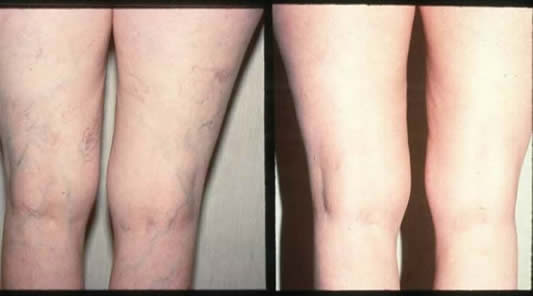
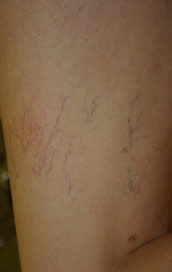
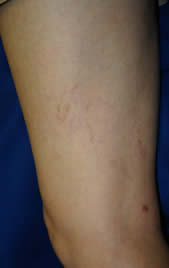
Spider veins are small veins that lie close to the surface of the skin. Varicose veins are larger vessels, usually more than a quarter of an inch in diameter, darker in color and tend to bulge. Varicose veins are also more likely to be painful and be related to more serious underlying vein disorders. Several factors contribute to the development of spider and varicose veins, including heredity, pregnancy, hormonal changes, taking oral contraceptives and estrogens, or an occupation that demands long periods of standing or sitting. Sclerotherapy can be used to treat certain varicose veins, however surgical intervention is sometimes necessary. A very effective and commonly used treatment for spider and smaller varicose veins is the FDA approved sclerosant drug called Asclera (polidocanol). There are side effects associated with the use of all sclerosants that must be considered, including: allergic reactions, blood clots, pulmonary embolism, ulceration, new vessel formation, matting, tissue discoloration and rarely death. Although these side effects are uncommon, each patient should discuss their risk factors with their provider prior to treatment. Multiple sclerotherapy treatments are usually necessary. Bruising usually resolves within 3-4 weeks. Laser Therapy For Small Spider Veins Laser treatment of small spider veins can be a quick and efficient. Multiple treatments (usually 2 to 4) may be necessary. A recovery period of about 6 weeks may be necessary for bruises and the occasional blister to resolve. No needles or medications are used with laser vein treatment. This same laser may also be used to lighten brown spots and remove unwanted leg hair. In some people spider and varicose veins may become noticeable in the teen years. Others may not appear until later in life. Although vein problems are not as common in men as they are in women, sclerotherapy and laser vein removal are just as effective in both females and males. Before deciding to have sclerotherapy or laser vein therapy think carefully about it and discuss it with your Bay Oaks Dermatology provider. Before sclerotherapy 4 weeks after 1st treatment
|
||||||||||||
|
|||||||||||||